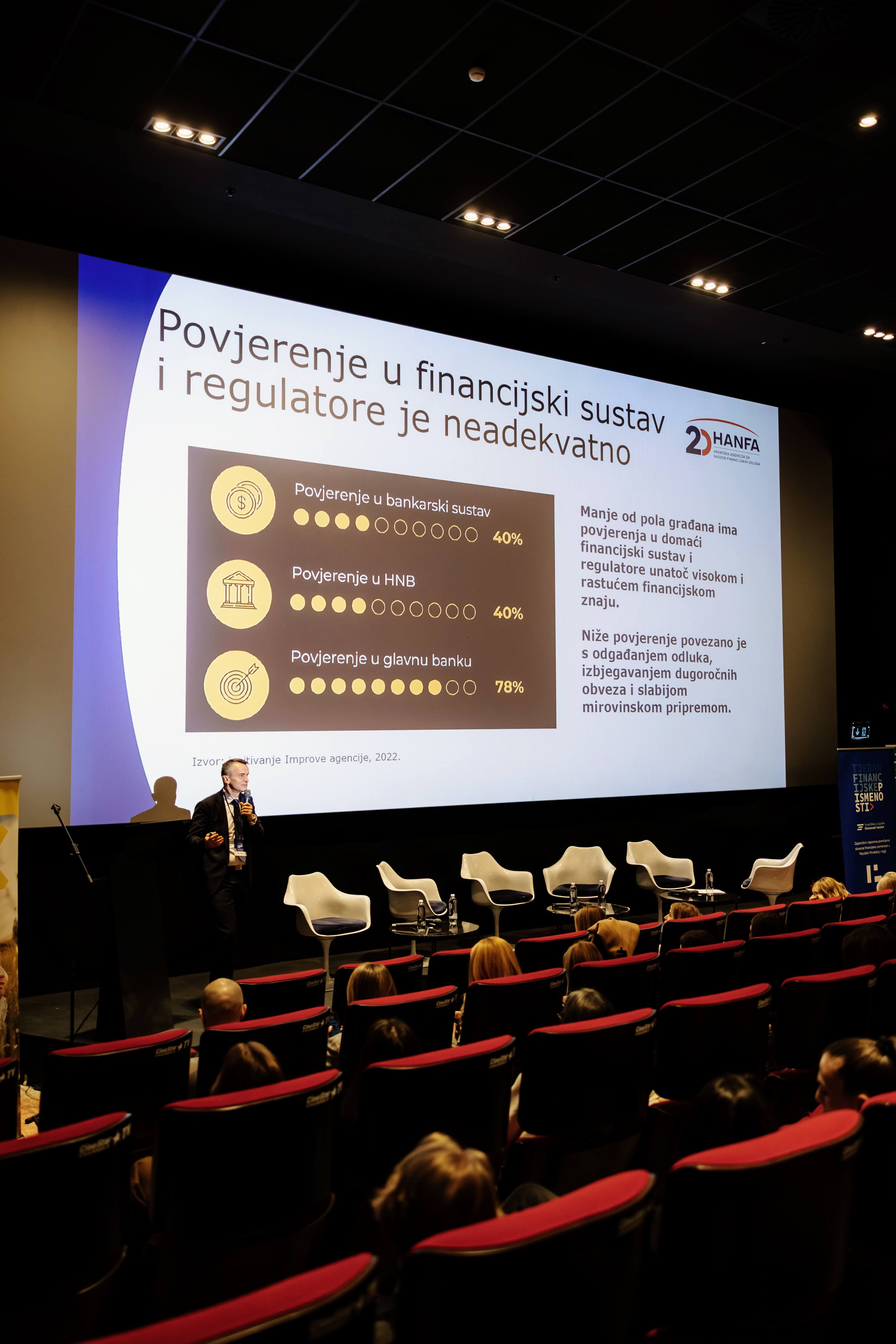
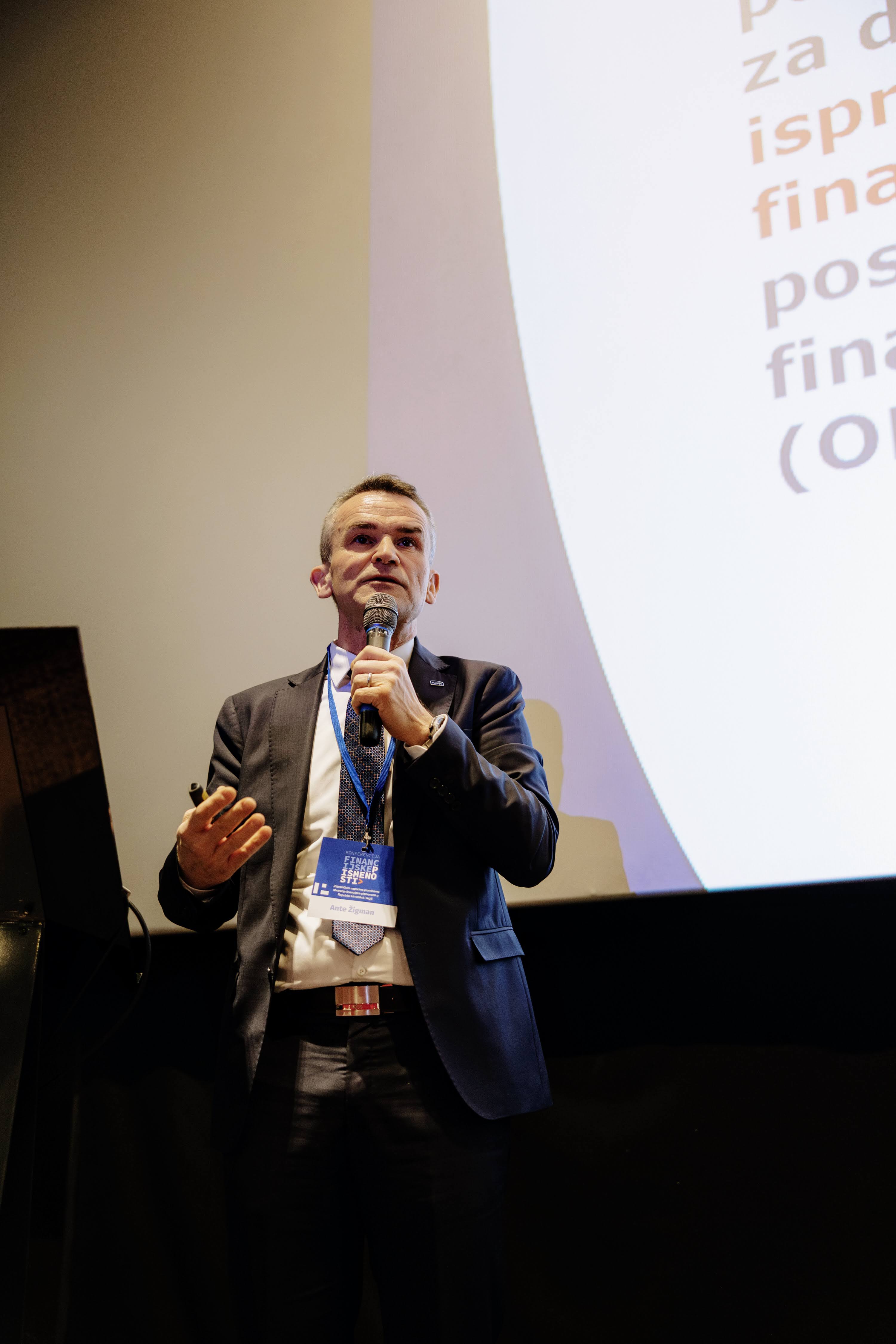
A. Žigman speaks at the 4th Regional Financial Literacy Conference
Ante Žigman, President of Hanfa Board, delivered a lecture at this year's 4th Regional Financial Literacy Conference titled “Unfiltered finance: opportunities and challenges of the digital age”.
His lecture, “When reason isn’t enough: how trust and emotions shape financial decisions”, served as an excellent introduction to the subsequent panel discussion, which focused on the topic “Influence me if you can: the psychology of financial success in the online era”.
In his address, he highlighted the impact of emotions on personal finance management and financial decision-making. He emphasized that this impact is clearly reflected in the real behaviour patterns of citizens, especially regarding long-term financial decisions. A large majority of citizens do not actively choose their pension fund, which indicates a lack of engagement and awareness. Only a small portion of the population uses the third pension pillar, pointing to a lack of long-term perspective and motivation. Meanwhile, those who do use the third pillar are typically individuals with higher levels of education and greater financial discipline. Research also shows that people fear losses more than they value gains, often resulting in overly conservative behaviour with regard to savings.
Understanding different behavioural patterns, mental shortcuts, and the ways emotions shape our financial decisions is crucial. This is why financial education must be innovative and inclusive, aiming not only to improve knowledge but also to influence actual financial behaviour. Traditional, ex cathedra teaching methods provide limited results when it comes to adopting new behavioural patterns.
The goal of the conference was to encourage the exchange of ideas and opinions and to offer practical recommendations for improving financial literacy and building financial capability in the Republic of Croatia and the wider region. Special emphasis was placed on fostering dialogue among key stakeholders – representatives of the government, educational institutions, the financial industry, and the private sector. Another objective was connecting professionals and the broader public from different industries and social spheres to jointly promote financial literacy and share best practices in financial education.